
Cash Flow Management for Small Businesses: Forecast and Improve It
Cash flow is the movement of money into and out of your business — when it arrives, when it leaves, and how much is in the bank at any moment. It is not the same as profit. A business can be profitable and still run out of cash, because the money it is owed arrives weeks after the bills are due. It can also lose money on paper for a month and still pay its bills, because cash from earlier sales is still arriving. This guide explains how to manage that timing: how to build a 13-week cash flow forecast, how to handle receivables and payables, how to work through a realistic scenario, and what to do when cash gets tight. It comes with a free tool: the 13-week cash flow forecast template (Excel, free download), with five sheets, available on our Templates page too.
The central idea is simple and easy to forget: profit tells you whether the business model works; cash flow tells you whether the business survives. SCORE, the U.S. small business mentoring network, puts it the same way — more businesses fail from poor cash flow management than from lack of profitability, and forecasting 4 to 13 weeks ahead is the habit that separates businesses that survive a rough stretch from those that do not. The rest of this guide is how to build that habit.
Profit is not cash: the distinction that matters
Profit is revenue minus costs over a period. Cash flow is money in minus money out in the same period, by date. The two differ for three ordinary reasons: credit, timing, and non-cash items.
- Credit. You deliver work in March and invoice it, but the client pays in May. March shows a profit; May shows the cash.
- Timing. You pay rent on the 1st, suppliers on the 15th, and wages on the 30th — but your customers pay you on the 45th day. The bills do not wait for the receipts.
- Non-cash items. Depreciation spreads the cost of equipment over years in the accounts, but the cash left the bank when you bought it. Loan repayments are cash out, but only the interest is a cost in the profit figure.
EXAMPLE (hypothetical, with stated assumptions): a business invoices $10,000 of work in January, pays $6,000 of costs in January, and its customers pay 60 days after invoicing. On paper, January’s profit is $4,000. In the bank, January is $6,000 down, because the $10,000 does not arrive until March. The business is profitable and short of cash at the same time — and if it has no reserve, it cannot pay February’s bills. That is the trap this guide exists to prevent.
Keep the two views separate. A monthly profit-and-loss statement tells you whether the business works. A weekly cash flow forecast tells you whether it survives the next three months. Run both, every month, and never let a good profit figure persuade you that the bank balance is fine.

The 13-week cash flow forecast, step by step
A 13-week forecast looks thirteen weeks ahead — one quarter — and shows, week by week, what cash is expected in, what is expected out, and the resulting bank balance. Thirteen weeks is the right length for a small business: long enough to see problems coming and act on them, short enough that the forecast stays grounded in real invoices, orders, and bills rather than guesswork. SCORE’s cash flow guidance recommends forecasting 4 to 13 weeks ahead for the same reason — it is the horizon over which you can still do something about what you see.
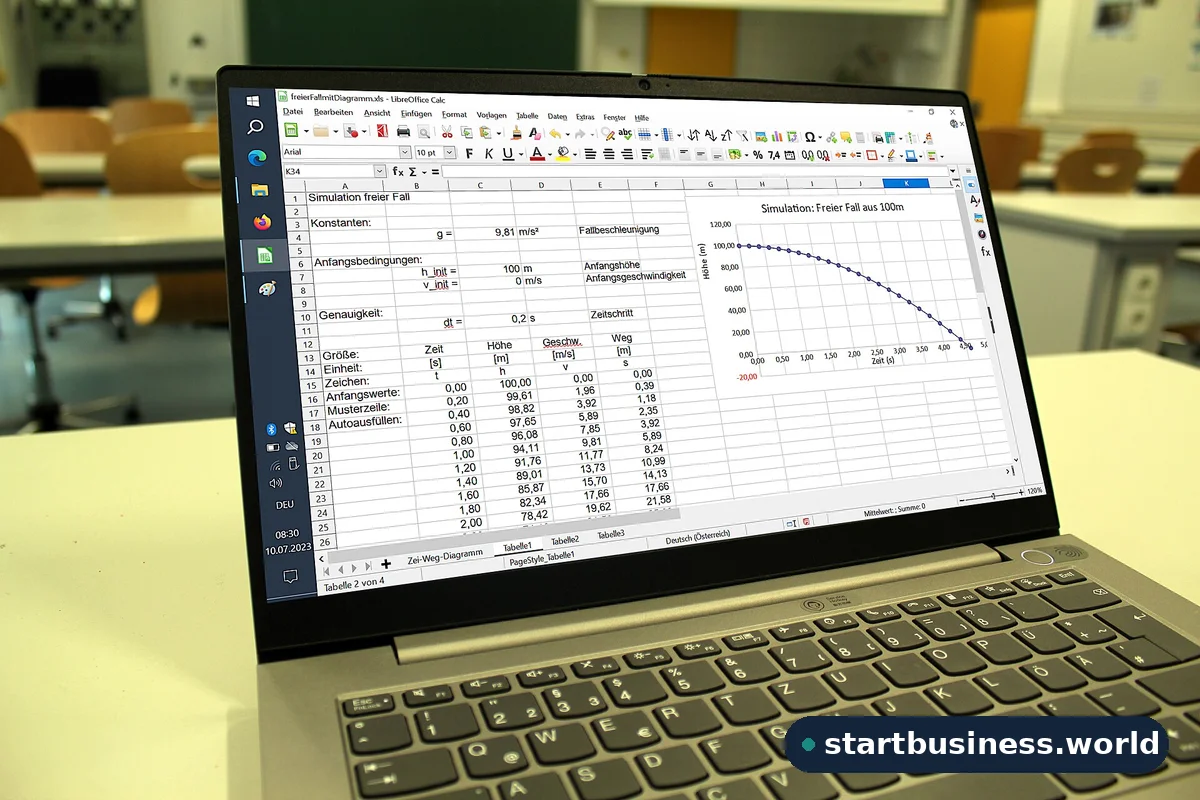
Our free 13-week cash flow forecast template (Excel, free download) has five sheets. Use it like this:
Sheet 1 — Instructions. Read it first. It explains each sheet, what to enter, and the assumptions to write down before you start, so that a forecast you revisit later still makes sense.
Sheet 2 — Assumptions. Record your starting bank balance, your payment terms (how long customers usually take to pay), your supplier terms, and any recurring weekly or monthly payments. These assumptions drive the forecast — if a customer who usually pays in 14 days starts taking 45, change the assumption here and watch the forecast move.
Sheet 3 — Cash in. List expected receipts week by week: invoices already sent with their due dates, regular customers’ usual payments, and any other income. Only include receipts you have real reason to expect — a signed order, an issued invoice, a regular customer with a payment history. A hope is not a receipt.
Sheet 4 — Cash out. List expected payments week by week: rent, wages, supplier bills, loan repayments, tax payments, subscriptions — every payment with its date. Include the irregular ones: quarterly tax payments, annual insurance, and any large bill you know is coming in the next thirteen weeks.
Sheet 5 — Weekly summary. This pulls cash in and cash out together and shows the closing bank balance for each of the thirteen weeks, with the lowest balance highlighted. The lowest week is the number that matters: it is the week you must plan for now, while there is still time to act.
Update the forecast weekly, on the same day each week. Replace forecasts with actuals as the weeks pass, and roll the forecast forward by one week each time, so that you always see thirteen weeks ahead. A forecast updated weekly stays honest; a forecast written once and filed away is decoration. The whole exercise takes under an hour once the habit exists — and it is the single most useful hour in a small business owner’s week.
Receivables: getting paid faster
Receivables are the money customers owe you. For most small businesses, they are the largest single cause of cash flow trouble — not because customers refuse to pay, but because they pay slowly, and the business has already spent the money. The fixes are unglamorous and effective:
- Invoice the same day. Every day between delivery and invoicing is a day added to the wait for payment. Invoice on delivery, and confirm the client received it.
- Shorten the terms where you can. Thirty-day terms are a habit, not a law. For new customers, or for small jobs, ask for payment on delivery or a deposit upfront, with the balance on completion. A deposit also tests whether the customer is serious.
- Make payment easy. Offer bank transfer and card payment, put the payment details on the invoice, and state the due date clearly. A customer who has to ask how to pay will pay late.
- Chase politely and promptly. Send a reminder the day after a payment is due, then again a week later, then by phone. Most late payments are forgetfulness, not refusal — but forgetfulness does not fix itself. Keep the tone professional: you are collecting money you are owed, not asking a favour.
- Know who pays late. Track payment times by customer. A customer who always pays in 60 days is a different fact from a customer who pays in 7 — price, terms, and the size of the jobs you take from each should reflect it. Consider stopping work for a customer whose invoices are long overdue; delivering more to someone who has not paid for the last job is lending them money at your own expense.
- Offer a small incentive for early payment only if it pays for itself. A small discount for payment within a few days can work — but work out what it costs you across the year before offering it, and never offer it on work that is already priced thinly.
Watch one number: the average days your customers take to pay. If it creeps up from 30 to 45 days, your cash flow has quietly worsened by two weeks of revenue — and the forecast will show it before the bank balance does.

Payables: timing what you owe
Payables are the money you owe suppliers and others. Managing them is not about paying late — late payment damages supplier relationships, can attract penalties, and can cost you the credit terms you rely on. It is about timing payments deliberately, and about knowing which payments can move and which cannot.
Sort your payments into three groups. Fixed and immovable: rent, wages, loan repayments, tax — pay these on time, always. Negotiable: supplier bills, where a conversation can change the date or the terms. Deferrable: discretionary spending — new equipment, extra advertising, an upgrade — which can wait for a better month. When cash is tight, cut the third group first, negotiate the second, and protect the first.
Use supplier terms properly. If a supplier gives you 30 days, paying on day 5 is a gift of 25 days of your cash for no benefit — pay on the due date, not before. But never pay late without talking to the supplier first: a supplier who hears from you before the due date will usually work with you; one who discovers a late payment will not. And keep a record of what you agreed, in writing.
Match large purchases to cash, not to profit. A profitable month is not the time to buy equipment the business does not need — it is the time to rebuild the reserve. Before a large purchase, check the 13-week forecast for the week the money leaves the bank, not the month the profit appears. If the purchase would take the lowest week’s balance below zero, delay it, split it, or finance it deliberately rather than discovering the gap afterwards.
Scenario example: a slow month, worked through
EXAMPLE — a labelled hypothetical scenario with stated assumptions. The figures are invented to show the method, not to describe any real business.
Assume a small service business with a starting bank balance of $8,000, weekly fixed costs of $1,500 (rent, wages, subscriptions), and two large invoices of $5,000 each due from customers in week 6. In weeks 1–5, only $2,000 of smaller receipts arrive. The forecast shows the balance falling each week: $8,000, then $6,500 after week 1’s costs and receipts are counted in simplified form, and so on, reaching about $2,500 by the end of week 5 — before the two large receipts arrive in week 6 and restore it to roughly $12,500. The business survives, but only just, and only because it knew the dip was coming.
Now change one assumption: the two customers pay two weeks late, in week 8 instead of week 6. The balance keeps falling and reaches roughly zero before the money arrives. Same profit, same customers, same work — a different outcome, decided entirely by payment timing.
Faced with that picture in week 1, the owner has options that do not exist in week 7:
- Call the two customers now, confirm the payment dates, and ask whether either can pay earlier or in part.
- Delay a discretionary purchase planned for week 3.
- Ask a supplier for an extra two weeks on a bill due in week 6.
- Bring forward a piece of work that can be invoiced and paid quickly.
- Draw on the cash reserve — which is exactly what it is for — and plan to rebuild it when the large receipts land.
None of these is dramatic. All of them depend on seeing the problem five weeks before it arrives. That is the whole value of the forecast: time to act, while the options are still cheap and polite.

Improving cash flow: the levers, in order
When cash is tight, work through the levers in this order — fastest and cheapest first:
- Collect what you are owed. Chase overdue invoices today. It is your money, and it is the fastest cash available.
- Stop discretionary spending. Pause anything that can wait a month. A subscription, an upgrade, a purchase — defer it.
- Speed up the next receipts. Invoice work already done, ask for deposits on work about to start, and offer to bring a job forward for a customer who can pay quickly.
- Negotiate terms. Ask suppliers for longer terms or a split payment, and ask your largest customers whether they can pay earlier. Ask early, in writing, with a specific proposal.
- Cut costs that do not earn. Review every subscription and service. If it does not earn money or save real time, cancel it.
- Build the reserve in good months. The best time to fix cash flow is when it is not broken. A reserve built in good months is what carries the bad ones.
What not to do: do not borrow to cover a structural loss. Borrowing can bridge a timing gap — money that is coming, but late. It cannot fix a business that spends more than it earns. If the forecast shows the balance falling month after month, the fix is to raise prices, cut costs, or change the offer — not to borrow. If you do consider borrowing, read the terms carefully and consider independent advice first.
Also consider the business plan connection: a cash flow forecast is one of the financial projections a lender or investor will ask for, and the U.S. Small Business Administration’s business plan guidance lists forecasted cash flow statements among the projections to prepare. Our guide to how to write a business plan explains how the forecast fits with the rest of the plan.
Cash flow warning signs
- You check the bank balance before paying any bill. A healthy business knows its balance without looking; a business that checks before every payment is already short.
- You pay suppliers late, regularly. Occasional lateness is an accident; regular lateness is a cash flow problem.
- Customers owe you more than a month of revenue. The longer the receivables pile grows, the more of your cash is sitting in other people’s accounts.
- You use new sales to pay old bills. This works until sales dip — and then there is nothing behind it.
- You have no reserve. Without a reserve, every surprise is a crisis.
- You avoid looking at the numbers. The most common warning sign of all. If the forecast is frightening, it is doing its job — the fear is information, not a reason to stop looking.
If several of these apply at once, act this week: chase receivables, cut discretionary spending, update the 13-week forecast, and talk to an accountant or a SCORE mentor. Getting advice early is cheaper than getting it late.

Browse the full Business Finance hub for the other guides in this section.
Sources
- SCORE, “Cash Flow Management” — https://www.score.org/resource/article/cash-flow-management — accessed 18 November 2026.
- U.S. Small Business Administration, “Write your business plan” — https://www.sba.gov/business-guide/plan-your-business/write-your-business-plan — accessed 18 November 2026.
- Internal Revenue Service, “Small Businesses Self-Employed” tax centre — https://www.irs.gov/businesses/small-businesses-self-employed — accessed 18 November 2026.
- U.S. Census Bureau, Business Formation Statistics — https://www.census.gov/programs-surveys/bfs.html — accessed 18 November 2026.
- All worked figures and the scenario in this guide are labelled EXAMPLE with stated assumptions. No earnings figures, rates, or success rates are quoted, because they vary by business and go stale quickly — check current guidance from the relevant authority for your situation.
Frequently asked questions
What is cash flow management?
Cash flow management is the practice of forecasting when money will arrive and leave your business, and acting on that forecast so the bank balance never runs out. It is different from managing profit: a profitable business can still run out of cash if its customers pay late and its bills are due early.
How do I create a 13-week cash flow forecast?
Start with your current bank balance, then list expected cash in and cash out week by week for thirteen weeks, using real invoices, orders, and bills with their dates. Update it weekly, replacing forecasts with actuals and rolling it forward one week at a time. Our free Excel template has five sheets that do this for you.
Why can a profitable business run out of cash?
Because profit and cash arrive on different timetables. A sale invoiced in January and paid in March is January profit but March cash, while rent and wages are due every month. If customers pay slowly and bills are due quickly, the bank balance falls even while the business is profitable on paper.
How can I get customers to pay faster?
Invoice the same day you deliver, state the due date clearly, make payment easy, and chase politely the day after a payment is due. Ask for deposits on new work, shorten terms for new customers, and track how long each customer takes to pay — then set terms and prices that reflect it.
How much cash reserve should a small business keep?
There is no single right number. A common planning target is three to six months of essential fixed costs, built up gradually — but the right target depends on how variable your revenue is and how quickly you can cut costs. The 13-week forecast shows you the lowest week ahead, which is the reserve’s real job to cover.
Should I borrow money to fix a cash flow problem?
Only to bridge a timing gap — money that is definitely coming, but late. Borrowing cannot fix a business that spends more than it earns; if the forecast shows the balance falling month after month, the fix is to raise prices, cut costs, or change the offer. Read the full terms before borrowing, and consider independent advice.
How often should I update my cash flow forecast?
Weekly, on the same day each week. Replace forecasts with actuals as the weeks pass, and roll the forecast forward by one week each time, so you always see thirteen weeks ahead. A forecast updated weekly stays honest; a forecast written once and filed away is decoration — and the whole exercise takes under an hour once the habit exists.
How do I calculate cash flow?
Cash flow is money in minus money out in the same period, by date: add up the cash that actually arrived, subtract the cash that actually left, and the result is the change in your bank balance. It is not the same as profit — a business that invoices $10,000 of work in January and pays $6,000 of costs is $4,000 profitable on paper, but $6,000 down in the bank if the $10,000 does not arrive until March.
This guide is general educational information, not financial advice. See our disclaimer.
Photo credits: DigiGal DZiner (CC BY-SA 4.0), MikeRun (CC BY-SA 4.0).
Last reviewed: 22 November 2026.