
Business Resources
Useful things in one place: our free templates and tools, and the official sources our guides rely on. Everything here is free to use; templates come with the guide that explains how to use them.
How to use this page
This page is an index, not a course. Use it the way you would use a library catalogue: find the thing that matches the decision in front of you, then follow it to the guide that explains it.
- Start with the guide that matches your stage. If you have no idea yet, start with Business Ideas. If you have an idea and need the launch pathway, start with Start a Business. If the question is money, start with Business Finance.
- Download the template that goes with it. Each template is published together with the guide that explains how to fill it in. Download it before you start reading the guide, so you can fill it in as you go.
- Read the instructions sheet before editing. Every template states its assumptions on the first page or sheet. If a template asks for a number you do not know, treat that as a question to research — not a number to guess.
- Check the source links for the rules where you live. Registration, taxes, licences and employment rules vary by country. Our guides name the official source for each country-specific claim; that source is the authority, not this site.

Our templates, at a glance
All five templates are free to download and use, with no email address required. Each one is an original, editable spreadsheet file.
| Template | What it does | Use it with |
|---|---|---|
| Business plan template | Outline, market section and financial assumptions for a full plan | How to Write a Business Plan |
| Startup costs checklist | One-time costs, monthly costs and working capital, with a contingency line | Start a Business |
| Business budget template | Revenue, costs and cash reserves, with a currency input and scenarios | Business Finance |
| Cash flow forecast sheet | Cash in and out, receivables, payables and a reserve, 13 weeks ahead | Business Finance |
| Marketing plan worksheet | Audience, positioning, channels, budget, KPIs and a 90-day plan | Marketing & Sales |
Full descriptions of what is inside each template — sheet by sheet — are on our templates page, including a worked EXAMPLE for the break-even figures in the business plan template.

Which template first?
If you are still deciding whether to start, take the startup costs checklist first: it turns a vague idea into a concrete list of costs, and the total often decides the question by itself. If you are already trading and money feels tight, take the 13-week cash flow forecast: it shows the tightest week before it arrives. If you need to explain the business to someone else — a lender, a partner, a landlord — take the business plan template. And if customers are the problem, take the marketing plan worksheet before spending anything on advertising.
A worked route through the resources: an EXAMPLE
Consider a hypothetical example of how one reader might use this page. Suppose a reader has an idea for a service business and a small amount of savings, and wants to know whether the idea is worth testing. The route would look like this. First, they read the validation guidance in Start a Business, which explains how to interview potential customers and test demand with a small paid offer. Second, they download the startup costs checklist and fill it in honestly — one-time costs, monthly costs, working capital, and a contingency line — so the idea becomes a list of numbers. Third, they use the business budget template to test the slow case: what happens if sales are much lower than expected in the first months? Fourth, they check the official source for the rules where they live — registration, licences and tax — before spending anything. This example is hypothetical, with its steps stated as a route rather than a result: it shows how the resources fit together, not what will happen for any real reader. Your route will differ, because your decision differs — but the pattern is the same: guide first, template second, official source third.
Our templates
- Business plan template — outline, market section and financial assumptions, from How to Write a Business Plan.
- Startup costs checklist — one-time costs, monthly costs and working capital.
- Business budget template — revenue, costs and cash reserves, with a currency input.
- Small business marketing plan — audience, positioning, channels, budget and a 90-day plan.
Our tools
- Break-even calculator — find the sales level where your business stops losing money, with the formula and assumptions shown.
Official starting points
These are official sources, useful in many countries. Rules, fees and programme availability vary by country and by state or region — always check the source that applies to you.
Official sources, and what each one is for
Our guides rely on official sources wherever a rule, a figure or a programme is involved. These are the five we cite most often, and what each one is actually useful for.
U.S. Small Business Administration (SBA) — sba.gov
The SBA is the starting point for starting, funding and running a business in the United States. Its guidance covers the full journey — including its 10 steps to start your business, from market research and writing a plan through funding, location, structure, name, registration, tax IDs, licences and permits, to opening a business bank account. When our guides describe the U.S. process, the SBA is the source we check first: sba.gov.
IRS Small Business and Self-Employed Tax Center — irs.gov
The IRS Tax Center is the source for United States federal tax information for small businesses — which forms apply, what records to keep, and how different business structures are taxed. Tax rules change, and they depend on your structure and situation, so our guides cite the IRS page for each claim and never summarise tax law as if it were the same for everyone: irs.gov.
U.S. Census Bureau — Business Formation Statistics — census.gov
The Census Bureau’s Business Formation Statistics are the official data on new business applications in the United States. The most recent figure we cite is 5,671,836 business applications in 2025 — a record year, up 62.1% on 2019 (U.S. Census Bureau, Business Formation Statistics, accessed 17 November 2026). That figure counts applications, not successful businesses, and it is a measure of how many people are starting, not of how many succeed. Use it as context, not as encouragement to skip validation: census.gov.
SCORE — score.org
SCORE offers free small business mentoring and templates in the United States, delivered by volunteers. It is useful in a different way from the sources above: not as an authority on rules, but as a source of practical templates and a person to talk a decision through with. If you want a second pair of eyes on a plan, a SCORE mentor is a good place to find one: score.org.
Federal Trade Commission (FTC) — ftc.gov
The FTC is the source for advertising and endorsement rules in the United States — including when a recommendation must be disclosed, and what counts as a misleading review or testimonial. Our affiliate marketing guidance is built on the FTC’s Endorsement Guides and its rule on the use of consumer reviews and testimonials. If you recommend products to an audience, the FTC’s guidance is the document to read before you publish: ftc.gov.
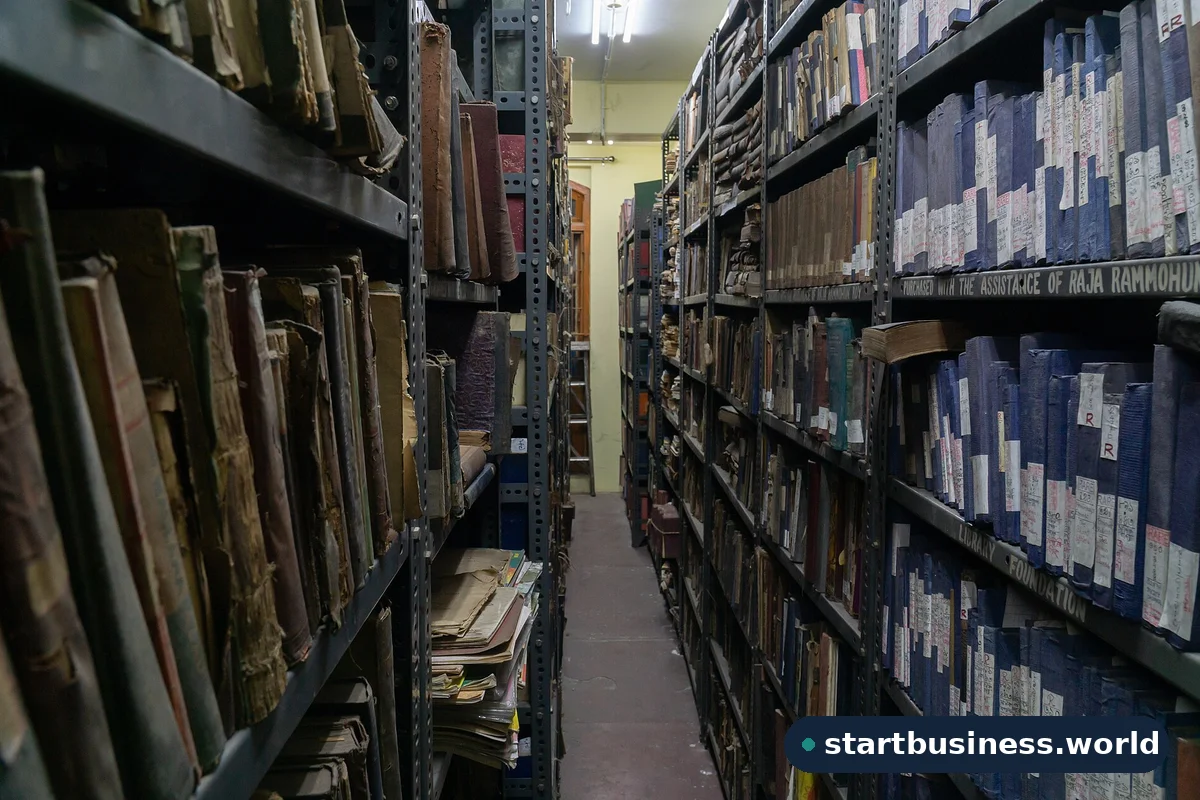
Outside the United States, the equivalent starting point is usually your national business registry or tax authority. Our guides name the official source for each country-specific claim they make, so you can check the rule where you live rather than trusting a summary written for another country.
Using official sources well
An official source is only useful if you read it the right way. Three habits help. First, check the date: guidance, fees and programme availability change, and a page written for last year’s rules may not describe this year’s. Our guides state the date a figure or a rule was checked, and the source itself usually shows its own update date. Second, check the jurisdiction: a rule from the U.S. Small Business Administration describes the United States, and a tax page from the IRS describes United States federal tax. If you live elsewhere, the equivalent source is your own national registry or tax authority, and our guides name it where the claim is country-specific. Third, read the source rather than a summary of it when the decision matters: registration, licences and tax are exactly the topics where a summary can leave out the exception that applies to you. The links on this page take you to the source itself, not to another summary.
One more caution: official sources disagree with each other less often than secondary sources disagree with them. If a blog and an agency page say different things, trust the agency page — and if two agency pages seem to disagree, read both carefully, because they are usually describing different cases, different dates, or different jurisdictions. When our guides find such a difference, they say so rather than smoothing it over.
Finally, remember that an official source is a starting point, not a complete answer. The SBA explains the United States process; your state or city may add its own steps. The IRS explains federal tax; your state may tax the same income differently. SCORE mentors can talk through a decision, but they cannot make it for you. Use the sources on this page to find the rule, then apply it to your own situation — and when the situation is complicated, a qualified professional in your jurisdiction is the right next step.
- U.S. Small Business Administration (SBA) — starting, funding and running a business in the United States.
- IRS Small Business and Self-Employed Tax Center — United States federal tax information for small businesses.
- SCORE — free small business mentoring and templates in the United States.
- U.S. Census Bureau — Business Formation Statistics — official data on new business applications in the United States.
Outside the United States, the equivalent starting point is usually your national business registry or tax authority. Our guides name the official source for each country-specific claim they make.
Tools by use case
Our tools are organised by the job they do, not by brand. The table below is the short version; the full selection guidance — including free-versus-paid thinking and privacy questions — is on our Business Tools page.
| Use case | What helps | Start with |
|---|---|---|
| Planning | Business plan and budget templates | Templates |
| Money | Cash flow forecast and the break-even method | Business Finance |
| Marketing | Marketing plan worksheet | Marketing & Sales |
| Operations | Checklists for launch and growth | Business Growth & Tools |

The break-even method deserves a sentence of its own, because it appears in more than one template. In words, the break-even point is the sales level where the business stops losing money: fixed costs divided by the contribution each sale makes after its variable cost. The business plan template includes a worked EXAMPLE with its figures shown, so you can see the method applied before you use it on your own numbers. A calculator that hides its formula is less useful than a spreadsheet that shows it — that is why our templates show their workings.
How we choose what to list
We list a resource when it meets all four of these tests.
- It is genuinely useful to a reader of our guides. A resource earns its place by answering a question our readers actually ask, not by being popular or well known.
- We can verify what it is. We check the resource itself — its publisher, its content, and what it asks of the reader — before listing it. A resource we have not checked is not listed.
- It is free to use, or its cost is stated plainly. Our own templates are free. An outside resource that charges is only listed with its cost made clear, and never presented as free when it is not.
- It fits our editorial independence. Editorial picks and paid placements are kept separate — and there are currently no paid placements on this site. If that ever changes, paid listings will be labelled, as our affiliate disclosure explains.
We do not list a resource because a vendor asked us to, because it pays a commission, or because it ranks well in search results. Popularity is not evidence of usefulness, and a commission is not a reason to recommend something.
How resources stay current
A resource page goes stale quietly: a link moves, a template’s guide is updated, a figure is superseded. We keep this page current in four ways.
- Templates are reviewed when the matching guide is updated. A template and its guide are a pair — when one changes, the other is checked too.
- Official links are checked against the source. If an agency moves a page or rewrites its guidance, the link and the summary are updated to match.
- Outdated figures are removed, not patched over. A statistic that can no longer be verified is taken out rather than left in place with a hopeful date.
- Change dates are shown after substantive review. A page shows an update date only after a real review, not after a cosmetic edit — as our editorial policy requires.

If you find a broken link, an outdated figure, or a resource that no longer does what this page says it does, tell us. That is a correction, and it goes through the same process as any other error on the site. And if there is a resource you think belongs here — an official source, a genuinely useful free tool, a template that fills a gap — tell us that too, with the question it answers. The test it must pass is the same four-point test above.
What this page does not list
A curated page is defined as much by what it leaves out as by what it includes. This page does not list tools or templates we have not checked ourselves, however popular they are. It does not list paid placements, and there are currently none — editorial picks and paid placements are kept separate, and if that ever changes, paid listings will be labelled as our affiliate disclosure explains. It does not list resources that ask for personal details in exchange for access, because our own templates are free without an email address and we see no reason to send readers to a gate. And it does not list “best of” round-ups that rank products without publishing their criteria: a ranking without criteria is an opinion, and an opinion without criteria cannot be checked.
If a resource you expected to find here is missing, that is usually the reason — it failed one of the four tests, or we have not checked it yet. Tell us through our contact page and we will look at it: a suggestion with the question it answers is far more useful than a bare link, because the question is what the test is applied to.
How we choose what to list: in short
We list a resource when it is genuinely useful to a reader of our guides and when we can verify what it is. Editorial picks and paid placements are kept separate — and there are currently no paid placements on this site. See our affiliate disclosure and editorial policy.
Photo credits: Sumitsurai (CC BY-SA 4.0), Shixart1985 (CC BY 2.0), Philippe Alès (CC BY-SA 4.0).
Frequently asked questions
Are the templates on this page free?
Yes. All five templates are free to download and use, with no email address required, and each one is an original, editable spreadsheet file. Every template states its assumptions on the first page or sheet, so read them before you edit anything.
Which template should I start with?
If you are still deciding whether to start, take the startup costs checklist first, because it turns a vague idea into a concrete list of costs. If you are already trading and money feels tight, take the 13-week cash flow forecast, which shows the tightest week before it arrives. If you need to explain the business to someone else, such as a lender, a partner or a landlord, take the business plan template, and if customers are the problem, take the marketing plan worksheet before spending anything on advertising.
Which official sources do the guides rely on?
The five sources cited most often are the U.S. Small Business Administration (sba.gov), the IRS Small Business and Self-Employed Tax Center (irs.gov), the U.S. Census Bureau’s Business Formation Statistics (census.gov), SCORE (score.org) for free mentoring and templates, and the Federal Trade Commission (ftc.gov) for advertising and endorsement rules. Outside the United States, the equivalent starting point is usually your national business registry or tax authority, and the guides name the official source for each country-specific claim.
How should I use the resources page?
Treat it as an index, not a course: find the thing that matches the decision in front of you, then follow it to the guide that explains it. The pattern is the same throughout: guide first, template second, official source third. Download the template before you start reading the guide, so you can fill it in as you go.
What is the break-even point?
The break-even point is the sales level where the business stops losing money: fixed costs divided by the contribution each sale makes after its variable cost. The business plan template includes a worked example with its figures shown, so you can see the method applied before you use it on your own numbers.
Last reviewed: 25 November 2026.