
Small Business Marketing Plan: A Practical Template and 90-Day Example
Answer: A marketing plan is a short document that answers five questions: who your customers are, what you are offering them, where you will reach them, what it will cost, and how you will know it worked. This guide walks through each part of the plan, with a free worksheet and a worked 90-day example.
A marketing plan is a short document that answers five questions: who are your customers, what are you offering them, where will you reach them, what will it cost, and how will you know it worked? That is all it is. Many small businesses skip it and spend money on whatever channel is fashionable that month — then wonder why nothing adds up. This guide walks through each part of the plan, gives you a free worksheet to fill in, and shows a worked 90-day example so you can see what a real first quarter looks like. The example is labelled EXAMPLE throughout: it is a hypothetical illustration with stated assumptions, not a promise of results. No plan can guarantee customers, and this one does not try. Download the worksheet here: marketing plan worksheet (free download, 7 sheets).
What a marketing plan is — and what it is not
A marketing plan is not a fifty-page document, and it is not a slogan. It is a working plan, usually two to five pages, that you revisit every quarter. The SBA puts it simply: a marketing plan can persuade consumers to buy your products and services — it is the part of running a business where you decide, in advance, who you are trying to reach and how. If you have already written a business plan, the marketing plan is the section of it that deals with customers, expanded into a document of its own. If you have not written a business plan yet, do the marketing plan first anyway — it is the most useful part, and it stands on its own.
What a marketing plan is not: a guarantee, a budget you cannot change, or a list of every channel that exists. The channels you do not use are as much a decision as the ones you do. And a plan that sits in a drawer is worse than no plan, because it creates the illusion that the thinking has been done. Put a review date on it — ninety days from now — and keep it somewhere you will see it weekly.

1. Audience: who exactly are you trying to reach?
Every marketing decision flows from the audience, so this section comes first and deserves the most thought. “Everyone” is not an audience. “Small business owners” is barely one. A useful audience description names who the customer is, what problem they have, and how they currently solve it. Write it as a sentence: “Busy parents in our town who want a healthy weekday dinner without cooking.” That one sentence already tells you where to advertise, what to say, and what to charge.
Build the description from evidence, not imagination. Talk to five real or potential customers and ask what they buy now, what frustrates them about it, and where they look for alternatives. Look at who actually buys from you today — not who you wish bought from you — and check whether your best customers have something in common. Guessing at an audience produces marketing that speaks to nobody; five short conversations produce marketing that speaks to someone specific.
Keep the audience narrow at first. A business that tries to reach everyone spreads its budget so thin that nobody notices it. One clear audience, one clear problem, one clear offer — that is a plan a small budget can actually execute. You can widen the audience later, once the first group is buying.
2. Positioning and offer: why should they choose you?
Positioning is the reason a customer picks you instead of the alternative — including the alternative of doing nothing. It is not a list of features. “We use fresh ingredients” is a feature. “Dinner on your table in twenty minutes, with no cooking and no washing up” is a reason. Write your positioning as the answer to a customer’s question: “Why should I buy this from you, rather than from anyone else, or not at all?”
The offer is the concrete form of that answer: what exactly the customer gets, for what price, on what terms. A vague offer — “quality service at competitive prices” — says nothing. A concrete offer — “a weekly meal box for a family of four, delivered on Sundays, $60, pause any week” — can be judged, compared and bought. Make the offer specific enough that a customer can decide without asking you a question. If your offer needs a phone call to understand, it is not finished yet.
Check the offer against the audience. Does it solve the problem you identified, at a price the audience can pay, in a way they can actually use? Positioning and offer are where most marketing plans go wrong — because owners describe the business from the inside (“what we do”) instead of from the customer’s side (“what I get”).
3. Channels: where will you reach them?
A channel is a place where your audience already is, and where you can reach them at a cost you can afford. The question is not “which channels are best?” but “which channels does my audience actually use, and which can I run well?” A channel you cannot maintain — a social account you post on twice and abandon — does more harm than a channel you never started, because a dead account tells visitors the business is dead too.
| Channel | Best for | Watch out for |
|---|---|---|
| Your own website and search | Customers actively looking for what you sell | Takes months to build; needs useful content |
| Local listings and maps | Businesses serving a local area | Keep hours, address and phone accurate everywhere |
| Social media | Showing the product, building familiarity | Easy to spend hours with no sales to show for it |
| Repeat customers and announcements | Needs a list built honestly — never buy one | |
| Referrals and word of mouth | Trust-based, low-cost growth | Slow to start; depends on a good experience |
| Local partnerships and community | Reaching an audience someone else already has | Must benefit both sides, or it ends quickly |
| Paid advertising | Fast testing and reaching new people | Costs money even when it does not work; set a limit |
Pick two or three channels to start, not seven. One channel that reaches people looking for you (usually your website or a local listing), one that keeps you in front of past customers (usually email), and one that finds new people (social, partnerships, or advertising). Run them for ninety days, measure them, and only then decide whether to add another. The worksheet has a sheet for exactly this: channel, audience, cost, and what success looks like.

4. Budget: what will it cost?
A marketing budget is a limit you set in advance, not a total you discover afterwards. Decide the monthly amount before you spend anything, and split it between the channels you chose. The split should follow the audience, not fashion: if your customers find you by searching, spend more there; if they find you through people they trust, spend more on referrals and partnerships, which cost time more than money.
Count time as a cost. An hour spent writing a social post is an hour not spent serving a customer, and it should be judged the same way as money spent on an advertisement. When you compare channels, compare the full cost — money plus your time — against the results. A “free” channel that eats ten hours a week is not free.
Keep a small test budget separate from the main budget. Use it to try one new thing at a time, in a small way, for a short period — then judge it on results and either adopt it or stop it. If you change three channels at once and sales rise, you will not know which change caused it. And never spend money you need for the business’s basic costs: rent, suppliers and wages come first.
5. KPIs: how will you know it worked?
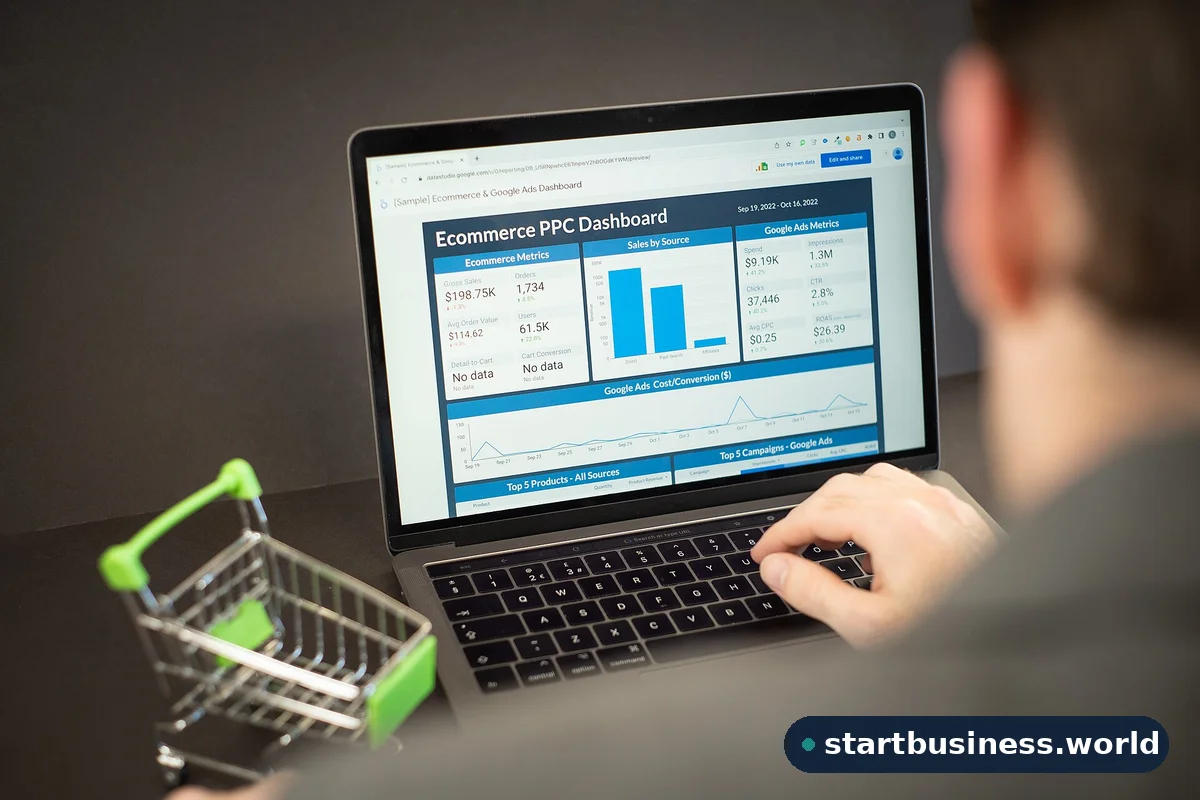
A KPI — a key performance indicator — is a number you track to judge whether the plan is working. Good KPIs are specific, measurable, and tied to the business, not to vanity. Followers, likes and page views are not KPIs: they can rise while sales stay flat. Enquiries, bookings, orders, repeat purchases and cost per new customer are KPIs, because they are the numbers that pay the bills.
Choose three to five, and no more. For most small businesses, a useful set is: number of enquiries per week, number of new customers per month, cost to acquire one new customer, and repeat purchase rate. Write down the starting number for each one before the plan begins — without a starting point, you cannot tell whether anything changed. Then review them weekly for the numbers you can see quickly (enquiries, orders), and monthly for the slower ones (cost per customer, repeat rate).
Decide in advance what you will do if a number misses its target. “We will review it” is not a decision. “If a channel brings no enquiries in thirty days, we will stop spending on it and move the money to the channel that is working” is a decision. Write it into the plan now, while you are calm, so you do not have to decide it later under pressure.
6. The 90-day plan (EXAMPLE)
The example below is a hypothetical illustration for a fictional business — a home-based bakery selling celebration cakes in one town — with stated assumptions. It is not a promise of results, and the numbers are illustrative, not data. Use it as a template for the shape of a plan, then fill in your own audience, channels, budget and targets in the worksheet.
The business (hypothetical). “Maya’s Cakes” — a home-based bakery, one owner, selling celebration cakes ordered in advance. Audience: parents and colleagues in the local area ordering cakes for birthdays and office occasions. Offer: custom celebration cakes, ordered at least five days ahead, collected or delivered locally. Starting point: a website with an order form, an Instagram account with 200 followers, and about four orders a week from word of mouth.
Days 1–30: foundations. Week 1: write the one-page plan — audience, positioning, offer, three channels, budget, KPIs — in the worksheet. Week 2: fix the website’s order page so a customer can order without emailing first, and check the local listing shows the correct hours, phone number and address. Week 3: photograph ten recent cakes properly. Week 4: email every past customer with a thank-you and a simple request — if they were happy, would they tell a friend? Target for the month: know the starting numbers and have every channel working. No paid advertising yet.
Days 31–60: reach and test. Weeks 5–6: post three times a week — finished cakes, preparation, and a customer story — and answer every comment and message within a day. Week 7: start a small paid test, with a fixed limit, aimed at local people searching for celebration cakes; run it for two weeks and compare the enquiries against the same two weeks without it. Week 8: ask three local businesses that serve the same audience — a party shop, a florist, a children’s play centre — whether they would display a cake menu card, offering the same in return. Target for the month: six orders a week, and a clear answer on whether the paid test earned its money.
Days 61–90: repeat what worked. Weeks 9–10: stop the channel that brought the fewest enquiries and move its time and money to the channel that brought the most. Week 11: start a simple email list — a card with every order inviting customers to join for a reminder before birthdays and occasions — and send the first email. Week 12: review the whole quarter against the KPIs, write down what worked, what did not, and what to change, and write the next ninety-day plan. Target for the quarter: eight orders a week, with at least a third from repeat customers or referrals.
Notice what the example does not contain: no new channel every week, no large advertising spend before the basics work, and no metric that is not tied to orders. Ninety days is long enough to learn what works and short enough to stay honest about it.

The free worksheet: 7 sheets
The marketing plan worksheet is a free download with seven sheets, designed to match this guide section by section. Fill it in as you read, and you will have a finished plan by the end.
- Sheet 1 — Audience. Who the customer is, what problem they have, and how they solve it today.
- Sheet 2 — Positioning and offer. Why a customer should choose you, and the concrete offer in one paragraph.
- Sheet 3 — Channels. The two or three channels you will use, what each one costs, and what success looks like.
- Sheet 4 — Budget. The monthly budget, split by channel, with time counted as a cost.
- Sheet 5 — KPIs. Your three to five numbers, the starting figure for each, and the target for ninety days.
- Sheet 6 — 90-day plan. The quarter broken into months and weeks, with one owner and one deadline per action.
- Sheet 7 — Review. A page for the end-of-quarter review: what worked, what did not, and what changes next quarter.
Keep the worksheet where you will see it — not in a folder you open once. A plan you look at weekly gets followed; a plan you file gets forgotten.
Common mistakes
- Marketing to everyone. A plan with no defined audience produces messages that speak to nobody.
- Too many channels. Seven half-run channels lose to two well-run ones.
- Copying a competitor. Their audience, budget and costs are not yours. Learn from them, then write your own plan.
- No numbers. A plan without KPIs cannot be judged, so it never gets improved — it just gets repeated.
- Changing everything at once. If you change three things and results move, you will not know which change caused it.
- Stopping too early. Most channels need weeks, not days, to show results. Judge a channel after thirty days of consistent effort, not after three posts.
- Confusing activity with results. Posting every day is activity. Enquiries and orders are results. Track the results.
Your next steps
- Download the marketing plan worksheet and fill in Sheet 1 — the audience — before anything else.
- Talk to five real or potential customers this week, and write down what they actually say.
- Write your positioning and offer in one paragraph each, and test them on one person who does not know your business.
- Choose two or three channels, set the budget, and pick your KPIs with starting figures.
- Put the ninety-day review date in your calendar now, and review the plan weekly.
- Browse the Marketing & Sales hub for the companion guides, and read how to start a small business if you are still at the beginning.
Sources
- U.S. Small Business Administration, “Manage your business” (marketing and sales) — https://www.sba.gov/business-guide/manage-your-business/marketing-sales — accessed 18 November 2026.
- The 90-day example in this guide is a hypothetical illustration for a fictional business, with stated assumptions. It is not a case study, and the figures in it are illustrative, not data. No results are promised.
This guide is general educational information, not legal or financial advice. See our disclaimer.
Frequently asked questions
What should a small business marketing plan include?
Five things: the audience you are trying to reach, your positioning and offer, the channels you will use, the budget, and the KPIs you will track. A ninety-day action plan turns those five sections into dated tasks. Anything beyond that is optional — a plan that covers those five things, on two to five pages, is a complete plan.
How much should a small business spend on marketing?
There is no figure that fits every business — it depends on your income, your margins, and what your channels cost. Set a monthly limit you can afford, split it between two or three channels, and judge each channel by the enquiries and orders it brings. Count your time as a cost too, and never spend money the business needs for rent, suppliers or wages.
How long does a marketing plan take to work?
Expect weeks, not days. A new channel usually needs about thirty days of consistent effort before you can judge it fairly, and a full quarter before you can judge the plan. Judge it at the ninety-day review, not after the first week.
What is the best marketing channel for a small business?
There is no best channel in general — only the best channel for your audience. Customers who search for what you sell are best reached through your website and local listings; customers who buy on trust are best reached through referrals and partnerships. Pick the channels your audience actually uses, run two or three of them well, and measure the enquiries each one brings.
Do I need a marketing plan if I already have customers?
Yes — arguably more so. A plan stops you spending on channels that feel busy but bring no orders, and it helps you grow deliberately instead of by accident. Even a one-page plan — audience, offer, three channels, budget, KPIs — is enough to make the next quarter’s decisions clearer.
What is the difference between a marketing plan and a business plan?
A business plan covers the whole business: the idea, the market, the structure, the finances and the funding. A marketing plan covers one part of it — customers: who they are, what you offer them, where you reach them, what it costs, and how you will know it worked. If you have a business plan, the marketing plan expands its marketing section into a working document of its own.
Photo credits: Zuko.io Images (CC BY 2.0).
Last reviewed: 25 November 2026.