
About StartBusiness.world
Who this site is for: first-time small-business owners in the United States.
StartBusiness.world is an independent business education website. We publish practical, evidence-based guides for people who are starting, operating, marketing, financing or growing a small business — written for the United States, with country caveats where rules differ.
Our mission
Our mission is simple: help a person who is starting or growing a small business make their next decision with confidence. Not every decision — the next one. Is this idea worth testing? What will it cost? Which legal form fits? How do I find the first customers? What does the money look like month to month? A guide succeeds when the reader can answer that question and knows what to do next.
We measure our work by usefulness, not by volume. A short guide that answers one question completely is worth more than a long page that covers everything shallowly. That is why each guide answers a single question, shows its steps, works an example, and names its sources. If a page does not help a reader decide something, it does not belong on this site.
What we will never do
- Promise income, customers, funding or rankings. No honest guide can guarantee those, because they depend on your market, your prices, your execution and your location.
- Invent customer stories, testimonials, reviews, prices or case studies. If an example is hypothetical, it is labelled as hypothetical, with its assumptions shown.
- Present advertising as independent advice. We currently carry no advertising, no sponsored content and no affiliate links — and if that ever changes, it will be labelled clearly, as our affiliate disclosure explains.
- Give personalised legal, tax, accounting or investment advice. Our content is general educational information, and where rules depend on your country or situation we say so and point you to the official source. See our disclaimer.
Guides on this site speak in an editorial voice, as StartBusiness.world. We do not publish author names, biographies or credentials unless they are real, evidenced and approved, and we do not invent experts. That is a deliberate choice: a named expert with invented credentials would be a false claim, and an anonymous guide that cites its sources is more trustworthy than a signed guide that does not. What you can check on every page is the evidence — the sources, the assumptions, the worked example — and that is what we ask to be judged on.
What we do
Starting a business means answering the same questions in a different order every time: Is this idea worth testing? What will it cost? Which legal form fits? How do I find the first customers? What does the money look like month to month? Our guides answer one question at a time, completely — with clear steps, worked examples, templates where they help, and sources you can check.
How a guide is built
Every guide follows the same five steps, so readers know what to expect and we know what to check before publishing.
- Choose a real question. Topics come from the questions small business owners actually ask — how to start, how much it costs, which legal form fits, how to find customers, how to price, how to manage cash. We do not publish a page just to rank for a keyword.
- Research primary sources first. Official government agencies, regulators, standards bodies, company documentation and reputable institutions come before blogs and round-ups. For legal, tax, registration and licensing topics we cite official government sources and name the jurisdiction.
- Draft clear steps, examples and checklists. The answer comes first, then the steps, then a worked example with its assumptions shown, then a checklist the reader can use. Jargon is defined when it first appears.
- Fact-check every claim against its source. Claims are traced to their source, calculations are worked through, and links are tested. A guide is not published because it is finished — it is published because it has been checked.
- Publish, then review on a schedule. Fast-changing pages are reviewed at least quarterly, evergreen guides at least annually, and a page shows an update date only after a substantive review. Our full process is in our editorial policy.

Our research standards
- Primary sources first. Agencies, regulators and official documentation before secondary summaries.
- Statistics carry source, date and scope. A number without a source, a date and a scope is not published as a fact.
- Examples are labelled when hypothetical. Assumptions are shown, so the reader can see exactly what the example proves — and what it does not.
- No invented testimonials, reviews or credentials. We do not publish author names, biographies or credentials unless they are real, evidenced and approved.
- Country caveats wherever rules differ. Registration, taxes, licences and employment rules vary by country — and often by state, province or city — and our guides say so.

AI tools may help with outlining and editing. They do not write our final content unsupervised, and they do not decide what is true. A human reviews every article for accuracy, sources, originality and usefulness before publication.
What we do not publish
As important as what we publish is what we refuse to publish. We do not publish a page just to rank for a keyword, and we do not copy or closely paraphrase competitors. Each guide must add something original: a framework, a worked example, a checklist, a template, a comparison or a decision rule. We do not publish income claims, guaranteed results, or “easy” and “passive” promises about any business model. And we do not publish statistics we cannot trace to a source with a date and a scope. If a fact cannot be verified, we leave it out or label it clearly as an illustrative assumption.
We cover six areas: business ideas, starting a business, online business, business finance, marketing and sales, and business growth and tools.
Who the content is for
First-time founders and growing small business owners — people who need a straight answer and a next step, not jargon. We write in clear international English, define terms when they first appear, and say plainly when advice depends on your country, industry, budget or business model. Our main audience is in the United States, but our guides are written to be useful worldwide, and country-specific rules are labelled as such.
Who this site is for, in detail
Four kinds of reader use this site most, and our guides are written with all four in mind.
First-time founders
People starting their first business, who need the whole journey explained in order — validate, plan, set up, fund, launch — without assuming they already know the vocabulary. If that is you, start with How to Start a Small Business and the Start a Business section.
Growing owners
Small businesses that already trade and are ready for the next step: steadier cash flow, better pricing, a first hire, or systems that do not depend on the founder doing everything. If that is you, start with Business Finance and Business Growth & Tools.
Side hustlers
People testing an idea alongside a job, with limited time and a limited budget. For them, validation matters most: a small paid test beats a large plan. If that is you, start with Business Ideas and the validation guidance in Start a Business.
Readers outside the United States
Our main audience is in the United States, but our guides are written to be useful worldwide. Country-specific rules are labelled as such, and the official source for each claim is named so a reader anywhere can check the equivalent rule where they live. If a guide only applies to one country, it says so plainly.

Whatever your situation, the same advice applies: start with the decision in front of you, read the guide that answers it, and use the template or checklist that goes with it. You do not need to read the whole site. You need the next step.
We write in clear international English and define terms when they first appear, because our readers include people for whom English is a second language and people meeting business vocabulary for the first time. Short sentences, short paragraphs and plain words are a deliberate choice, not a lack of depth: a guide that cannot be understood cannot be used. Where a term has a different meaning in different countries — a word like “company”, “licence” or “turnover”, for example — we say which meaning we are using and note the difference.
How we research
We prioritise primary sources: official government agencies, regulators, standards bodies, company documentation and reputable institutions. Every statistic carries a source, a date and a scope. Hypothetical examples are labelled as hypothetical, with their assumptions shown. We do not invent customer stories, testimonials, reviews, prices or case studies. Our full process is in our editorial policy.
How we make money
At present, StartBusiness.world has no affiliate links, no advertising and no sponsored content. If that ever changes, we will say so clearly — on the relevant page and in our affiliate disclosure — and recommendations will still be ranked by documented criteria, never by commission.
If monetisation ever changes
At present, StartBusiness.world has no affiliate links, no advertising and no sponsored content. That is a deliberate choice: it means no recommendation on this site can be influenced by a commission, because there is no commission to be influenced by. Tool and product comparisons are ranked by documented criteria — fit for a use case, features, price, availability and limitations — and the criteria are published with the comparison.
If that ever changes, three rules will apply, and they are stated in advance in our affiliate disclosure. First, the change will be disclosed clearly, on the relevant page and in the disclosure itself, before the first paid link goes live. Second, every paid link will be labelled near the link, not hidden in the footer alone, and will carry the correct link attribute so search engines and readers can tell it apart from an ordinary link. Third, recommendations will still be ranked by documented criteria, not by commission rate — and we will publish the criteria, the limitations, who each tool is for and who it is not for, and how we tested it.
We do not sell followed links, we do not disguise advertising as independent editorial content, and we will never claim a partnership that does not exist or invent tracking links, prices or test results. If you ever see a recommendation on this site that looks as if it was bought, tell us — that is exactly the kind of error our corrections process exists to catch.
There is one more thing to say about advertising, because it is the question readers ask most. If we ever open advertising or sponsorships, this page and our Advertise page will list the formats available, the audience information we can actually verify, and the terms — including that sponsored content is always labelled and that editorial recommendations are never for sale. We will not quote audience figures we cannot verify, and an enquiry will never guarantee a placement. Until then, the position is simple: we do not accept advertising, sponsored content or paid placements, and there is nothing for sale on this site except, eventually, nothing at all — the guides and templates are free.
Ownership
StartBusiness.world is an independent website.
Who owns StartBusiness.world
StartBusiness.world is an independent website. It is not owned by, controlled by, or affiliated with any tool vendor, marketplace, lender, franchise, or business directory, and no outside company decides what we publish. Editorial decisions are made by the site itself, on the basis of what helps readers make better decisions.
We disclose ownership only in these general terms, deliberately: what matters to a reader is not a company registration number or a postal address, but whether the content is independent, sourced and correctable — and those three things are verifiable on every page. Our guides cite their sources, our comparisons publish their criteria, and our corrections process is open to anyone who spots an error.
If you need to reach the people behind the site — with a question, a correction, a suggestion for a guide, or a business enquiry — the route is our contact page. We read every message, and messages about errors in our content are treated as corrections and checked against the source. We do not currently accept advertising or sponsored content; see Advertise for the current position.
Some readers will want more detail than general terms — a name, a company, an address. We understand that, and we have weighed it against the risk of publishing details that could be misused or that would imply a formal company structure that does not exist. What we can offer instead is verifiability: every claim on this site can be checked against its source, every comparison publishes its criteria, and every error can be reported and corrected through a public process. If those three things hold, the site is doing its job; if any of them fails, the ownership details would not have fixed it.
Corrections
If you find an error, please contact us. Material errors are corrected promptly, and significant corrections are documented. See our editorial policy for the full corrections process.
The corrections process, step by step
We correct material errors promptly. A material error is one that could change a reader’s decision — a wrong figure, a wrong step, a link to the wrong source, or guidance that no longer matches the official rule. Small typos are fixed as they are found; material errors go through the process below.
- Tell us through the contact form. Use our contact page and include the page, what is wrong, and — if you have it — a link to the correct source. A link to the source helps us fix it faster.
- We check the claim against the source. The claim is traced back to its source, and the correction is checked the same way a new guide would be checked.
- Material errors are corrected promptly. The page is fixed, and the fix is reviewed before it goes live.
- Significant corrections are documented. Where a correction changes the meaning of a page, it is noted on the page or in a corrections note, so readers who saw the earlier version can see what changed.
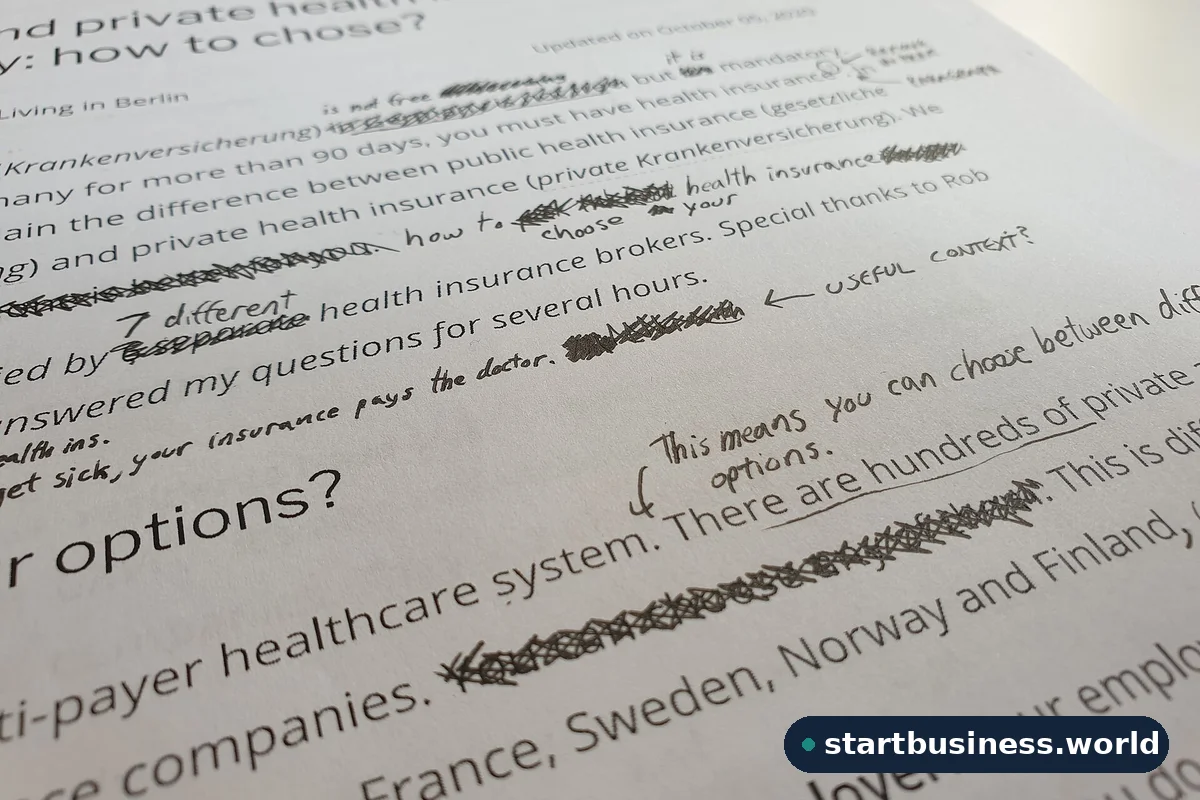
Corrections are welcome from anyone — readers, experts, vendors and officials alike. A correction is judged on the evidence, not on who sent it. If you disagree with a recommendation rather than a fact, that is useful too: tell us what you would do differently and why, and we will consider it in the next review of the page. Our full corrections policy is in our editorial policy, and our privacy policy explains what happens to the details you send us.
Not every message is a correction. Readers also write to request a guide on a topic, to suggest a resource, or to disagree with a recommendation. Topic requests are welcome: tell us the question you need answered and what you have already tried, and we will consider it against the same test as any other topic — is it a real question owners ask, and can it be answered with evidence? Disagreements are welcome too, especially when they come with evidence or experience: tell us what you would do differently and why, and we will consider it in the next review of the page. A guide that has survived a good disagreement is a better guide.
Photo credits: Shixart1985 (CC BY 2.0), Nicolas Bouliane (CC BY-SA 4.0).
Frequently asked questions
Who is StartBusiness.world for?
First-time small-business owners in the United States. The guides are written to be useful worldwide, and country-specific rules are labelled as such, but the main audience is in the United States. Four kinds of reader use the site most: first-time founders, growing owners, side hustlers testing an idea alongside a job, and readers outside the United States. Our guides check facts against official sources such as the U.S. Small Business Administration.
Does StartBusiness.world promise income, customers or funding?
No. The site will never promise income, customers, funding or rankings, because no honest guide can guarantee those: they depend on your market, your prices, your execution and your location. It also does not publish income claims, guaranteed results, or “easy” and “passive” promises about any business model.
Does the site carry advertising, sponsored content or affiliate links?
No. At present, StartBusiness.world has no affiliate links, no advertising and no sponsored content. If that ever changes, it will be disclosed clearly, and recommendations will still be ranked by documented criteria, never by commission.
Why are there no author names on the guides?
Guides speak in an editorial voice, as StartBusiness.world. The site does not publish author names, biographies or credentials unless they are real, evidenced and approved, and it does not invent experts: a named expert with invented credentials would be a false claim, and an anonymous guide that cites its sources is more trustworthy than a signed guide that does not. What you can check on every page is the evidence — the sources, the assumptions and the worked example.
How often are guides reviewed?
Fast-changing pages are reviewed at least quarterly, evergreen guides at least annually, and a page shows an update date only after a substantive review. Every guide follows the same five steps before publishing: choose a real question, research primary sources first, draft clear steps, examples and checklists, fact-check every claim against its source, and then publish and review on a schedule.
Last reviewed: 25 November 2026.